Solar Street Light Manufacturers in Pune: How to Choose the Right Supplier

Choosing between solar street light manufacturers in Pune comes down to four checks. Look for verified test reports, a LiFePO4 battery with MPPT charging, a written warranty that says who does the repairs, and past projects in Maharashtra. Starka Solar is a Maharashtra solar lighting manufacturer. It builds its lights and lithium battery packs in-house at Amravati MIDC and supplies Pune, Pimpri Chinchwad (PCMC) and Chakan.

Search “solar street light manufacturer near me” and most results are directory listings. They show who sells lights, not how to judge them. This guide fills that gap for buyers comparing solar street light manufacturers in Pune, Maharashtra.

Starka Solar at a glance Details
Company Starka Innovative Systems Pvt Ltd
Manufacturing In-house, A82/2 MIDC, Amravati, Maharashtra
Experience 10 years
Lights installed 300,000+ across 26+ states
Production capacity 300+ lights per day
Battery LiFePO4 packs, designed, assembled and tested in-house
Certifications ISO 9001, BIS, ERDA, NISE, RoHS, ZED Bronze; MNRE approved; LM-79 and LM-80 tested
Government buying GeM-authorised seller
Delivery 4–5 days after order confirmation, depending on quantity and location

What to Look for in a Solar Street Light Manufacturer in Pune

The best solar street light company in Pune for your site is the one that can prove its performance on paper, not just quote a wattage.

Manufacturing capability and product documentation

A manufacturer designs and builds the luminaire, and ideally the battery pack too. Solar street light dealers in Pune, like most solar street light suppliers in Pune, resell someone else’s product. A solar street light dealer in Pune suits small, urgent orders. For bulk or tender work, buy direct, or ask the dealer for the manufacturer’s documents.

Ask every supplier for:

  • A datasheet for each model, with lumens, panel watt-peak (Wp) and battery amp-hours (Ah)
  • LM-79 (luminaire photometry) and LM-80 (LED lumen maintenance) reports
  • A battery test report and MNRE or BIS references
  • GST and Udyam registration details

Product quality, warranty and after-sales support

Check the LED brand and efficacy in lumens per watt (lm/W), the battery chemistry, the charge controller and the ingress (IP) rating. For solar street light warranty and maintenance, ask three things. What does it cover? For how long? And where are repairs done? Starka Solar offers 2-year and 5-year warranty plans, with maintenance free during the warranty period.

How to evaluate suppliers for bulk orders

Solar street light wholesale suppliers in Pune should be able to show daily production capacity, a delivery schedule and spare stock. Before you finalise a solar street light supplier in Pune, test one sample on site. Starka Solar produces 300+ lights a day.

How to compare solar street light manufacturers in Maharashtra

Compare your shortlisted manufacturers on the same five points: lumens per watt, panel and battery size for each model, warranty term and service location, delivery time to Pune, and completed projects in Maharashtra. Ask each one for a reference site you can visit. A manufacturer with Maharashtra projects already knows local road and monsoon conditions.

Types of Solar Street Lights Available in Pune

Among solar outdoor lights, Pune buyers mostly choose between all-in-one, semi-integrated, decorative and solar high mast lights.

All-in-one solar street lights

An all-in-one solar street light puts the panel, battery, LED and controller in a single housing. Installation is quick. That makes the all-in-one solar street light in Pune a common pick for society roads and campuses. The trade-off is that panel size and angle are fixed by the housing.

Semi-integrated solar street lights

A semi-integrated solar street light keeps the LED and battery in one body but mounts the panel separately, so it can be angled toward the sun. That matters in Pune’s monsoon. Starka Solar’s semi-integrated LED solar street light range uses OSRAM LEDs at 120 lm/W, a 12.8V LiFePO4 battery and an MPPT controller, on 4–5 m poles.

Model Solar panel LiFePO4 battery Light output (high)
9W 40W 6Ah 960 lm
12W 40W 12Ah 1,440 lm
15W 40W 12Ah 1,800 lm
18W 50W 12Ah 2,160 lm
20W 60W 18Ah 2,400 lm
25W 75W 18Ah 3,000 lm
30W 100W 24Ah 3,600 lm

Solar street lights for industrial and commercial applications

Decorative dual-head models (9W×2 to 25W×2) suit parks and township entrances. For wide junctions and yards, Starka Solar is also a solar high mast light manufacturer. Its configurations run from 9W×4 on a 6 m pole to 60W×6 on a 9 m GI octagonal pole.

Solar Street Light Price in Pune: What Determines the Cost?

There is no single solar street light price in Pune, and the same goes for the all-in-one solar street light price in Pune. A quote depends on light output, panel and battery size, the pole, and installation. Starka Solar quotes per project, so compare quotes line by line.

LED output and lighting requirements

Compare lumens, not watts. A 30W light at 120 lm/W gives 3,600 lumens, while a cheaper 30W light at 90 lm/W gives only 2,700. Requests for a 20W or 30W solar street light price usually come from society and internal roads. A 40W, 60W or 100W solar street light price usually means wider roads, where high mast or custom builds are often better value.

Solar panel and battery capacity

Starka Solar’s 30W model pairs a 100W panel with a 24Ah battery. If a quote offers the same wattage with a much smaller panel, ask why.

Pole, foundation, installation and maintenance costs

The solar street light price with pole depends on height (4–5 m for streets, 6–9 m for high mast), GI tubular or octagonal construction and the RCC foundation. Solar street light installation cost is quoted separately, based on project size and site. For solar street light installation in Pune, Starka Solar’s team can install on site or guide your own crew by video. Solar pole lights in Pune usually come as a set: light, panel bracket, GI pole and foundation bolts. Check whether the pole is included before comparing quotes.

What to include in a bulk-order quotation

A solar street light bulk order price can only be compared when every solar street light project quotation lists the same items:

  1. Model, lumens, panel Wp and battery Ah for each light
  2. Pole height, type and foundation
  3. Installation and transport charges
  4. Warranty term and service location
  5. Delivery timeline and payment terms

Technical specifications to check in a tender

  • Lumen output and efficacy (lm/W) for each model, backed by an LM-79 report
  • LED lumen maintenance, backed by an LM-80 report
  • Battery chemistry, voltage and capacity (Ah), with a test report
  • Solar panel rating (Wp) and BIS approval
  • MPPT charge controller and autonomy (number of cloudy days covered)
  • IP rating of the luminaire
  • Pole height, material and galvanising
  • Warranty term and service terms

How to Evaluate Solar Street Light Battery Backup

Battery backup is the energy stored, divided by how much the light draws each hour.

Battery capacity and usable energy

Multiply voltage by amp-hours. A 12.8V, 24Ah LiFePO4 battery stores about 307 watt-hours. LiFePO4 handles deep daily cycles and heat well, which is why a solar street light with lithium battery is now standard in Pune.

Expected operating hours and autonomy

Starka Solar lights run dusk to dawn with auto-dimming late at night, rated for about 12 hours in light-economy mode. Autonomy is the number of cloudy days a light runs without a full charge. Ask every supplier for this figure in writing.

Charging performance in cloudy and rainy conditions

Pune’s monsoon runs from June to September, and cloud cover is heavier toward Talegaon and the Maval belt. Choose an MPPT controller, a generously sized panel and, for shaded or western sites, a semi-integrated model with an adjustable panel.

Choosing Solar Street Lights for Different Projects in Pune

The right light depends on the site, not the catalogue.

Industrial premises and warehouse roads

Choosing a solar street light for industrial use in Pune starts at the perimeter. Factories in Chakan, Bhosari MIDC and Talegaon need even light all night and little maintenance. Use 25W–30W semi-integrated lights along internal roads, and solar high mast lights for loading yards and gates. Off-grid lights also stay on during grid outages. As an industrial solar street light supplier in Pune, Starka Solar also works as a solar street light bulk supplier for Pune industrial estates, dispatching from a single plant.

Housing societies and residential roads

A solar street light for society roads in Hinjawadi, Wakad or PCMC is usually 12W–20W on a 4–5 m pole. All-in-one or semi-integrated models remove trenching and cabling, and decorative models suit gardens and entrance lanes.

Commercial campuses, parking areas and public roads

Campuses and parking areas suit 20W–30W lights or high mast. Starka Solar has supplied semi-integrated solar street lights for a project in Baramati, Pune district, and for projects in Wardha and Amravati. That is why it fits buyers looking for the best solar street light for roads in Maharashtra.

Areas We Serve in Pune

Starka Solar delivers across Pune district, with installation support at each site.

  • Pimpri Chinchwad and PCMC: solar street lights in PCMC for housing societies, township roads and gardens. Buyers looking for a solar street light company in Pimpri Chinchwad can order direct from the factory.
  • Chakan: a solar street light supplier in Chakan for factory perimeters, warehouse roads and loading yards.
  • Bhosari MIDC: buyers searching for a solar street light manufacturer in Bhosari MIDC get factory-direct lights for internal roads and plant gates.
  • Hinjawadi: a solar street light supplier in Hinjawadi for IT campuses, parking areas and residential societies.
  • Talegaon: solar street lights in Talegaon with larger panels for the heavier monsoon cloud of the Maval belt.

Questions to Ask Before Selecting a Manufacturer

What warranty is provided?

Get the term, covered parts and exclusions in writing. Starka Solar offers 2-year and 5-year plans.

Are technical datasheets available?

Yes, they should be. Every model needs a datasheet and LM-79/LM-80 reports.

Are spare parts and after-sales service available?

Confirm where repairs happen and what on-site visits cost.

What installation and maintenance support is offered?

Ask whether the supplier installs with its own team, guides your crew, or does both.

Explore Starka Solar’s Solar Street Light Products

Starka Solar offers complete solar lighting solutions for Pune projects:

Share your site layout, road width and quantity with the Starka Solar team on +91 77988 80327 or info@starkasolar.com to get a project quotation.

Frequently Asked Questions

Who are the best solar street light manufacturers in Pune?

The best manufacturers in Pune share test reports, use LiFePO4 batteries and MPPT controllers, and can show Maharashtra projects. Starka Solar is a Maharashtra manufacturer with 300,000+ lights installed. It supplies all-in-one, semi-integrated and high mast solar lights across Pune and PCMC.

Which company supplies all-in-one solar street lights in Pune?

Starka Solar supplies all-in-one solar street lights in Pune for housing societies, campuses and internal roads. Delivery takes 4–5 days after order confirmation.

What is the price of a solar street light in Pune?

The price depends on wattage, panel and battery size, the pole and installation. Starka Solar quotes per project. Share your quantity, pole height and site location for an exact quotation.

How long does a solar street light battery last?

On a full charge, a Starka Solar light runs dusk to dawn, rated for about 12 hours in light-economy mode with auto-dimming. Ask any supplier for battery cycle life in writing.

What is the difference between a manufacturer, dealer and supplier?

A manufacturer builds the light and backs its warranty. A dealer or supplier resells it. For bulk orders and tenders, buying direct from a manufacturer such as Starka Solar gets you test reports and direct support.

What documents are required to buy solar street lights for a project?

Ask for model datasheets, LM-79/LM-80 reports, battery test reports, MNRE or BIS references, a warranty letter and GST details. Government buyers can order from Starka Solar through GeM.

Do solar street lights work in Pune’s monsoon?

Yes, if the light is sized for it. Choose an MPPT controller, a larger panel and a LiFePO4 battery. Semi-integrated models also let you angle the panel for better charging on cloudy days.

Does Starka Solar install solar street lights in Pune?

Yes. Starka Solar’s team can install across Pune, or guide your own crew with step-by-step videos. Installation is quoted separately from the product, based on project size and location.

See all Starka Solar FAQs for warranty, installation and maintenance questions.
By |2026-10-23T21:52:18+05:30October 23, 2026|Business, Solar Lights|0 Comments

Solar Street Light Manufacturer | Starka Solar

Finding the right solar street light manufacturer is an important step for businesses, infrastructure developers, government contractors, industrial facilities, and communities looking for energy-efficient outdoor lighting. Solar street lights use solar energy to power LED lighting systems, helping reduce dependence on grid electricity and support sustainable infrastructure across different environments.

Starka Solar provides solar street lighting solutions for residential, commercial, industrial, and infrastructure applications across India. Buyers looking for a solar street light manufacturer in Pune, a solar street light supplier in India, or a manufacturer for international projects can explore suitable product options based on lighting requirements, installation conditions, operating hours, and project specifications.

From all-in-one solar street lights for pathways and residential roads to semi-integrated systems for selected commercial and infrastructure projects, choosing the right solution requires more than comparing wattage or price. Solar panel capacity, battery performance, light output, weather protection, warranty, and after-sales support should all be considered before purchasing.

What Is a Solar Street Light Manufacturer?

A solar street light manufacturer designs, produces, or assembles solar-powered outdoor lighting systems that combine solar panels, rechargeable batteries, LED luminaires, and charge controllers. These systems collect solar energy during daylight and use stored energy to illuminate outdoor areas after sunset.

A suitable manufacturer helps customers select lighting systems according to required illumination, battery backup, solar charging capacity, environmental conditions, mounting arrangements, and project budgets.

Starka Solar offers solar street lighting solutions for customers exploring outdoor lighting requirements across India, including Maharashtra, as well as enquiries for projects requiring suitable products for wider markets. Product availability, technical specifications, delivery arrangements, and export requirements should be confirmed for each project.

About Starka Solar: Solar Lighting Solutions for Modern Infrastructure

Starka Solar, a brand of Starka Innovative Systems Pvt. Ltd., specialises in solar street lighting and lithium battery packs. Its lighting solutions are intended for applications such as public infrastructure, commercial establishments, industrial facilities, residential communities, and other outdoor spaces.

The company website reports more than 300,000 lights installed, coverage across 26+ states, and a production capacity of 300+ lights per day. These published figures provide useful starting points for buyers evaluating project experience and manufacturing capabilities; customers can request supporting information relevant to their requirements.

For organisations comparing solar street light manufacturers in India, evaluating product documentation, manufacturing capabilities, quality processes, warranty terms, and service arrangements can help make supplier selection more informed.

For international buyers, additional considerations may include destination-country electrical and lighting requirements, applicable certifications, import documentation, shipping arrangements, and local installation standards.

Explore the Starka Solar website to learn more about its products and company.

Solar Street Light Products from Starka Solar

Different locations require different lighting configurations. The choice depends on the size of the outdoor area, mounting conditions, available sunlight, expected operating hours, and maintenance preferences.

1. All-in-One Solar Street Lights

An all-in-one solar street light combines the principal lighting components into a compact integrated assembly. Depending on the model, these may include the solar panel, LED light, rechargeable battery, and charge controller.

This design can simplify installation by reducing the need to mount several components separately. It may be suitable for residential roads, pathways, parking areas, campuses, and selected commercial outdoor spaces.

When choosing an all-in-one solar street light in Pune or elsewhere in India, buyers should compare lumen output, panel capacity, battery specifications, backup expectations, mounting requirements, and the manufacturer’s warranty.

International buyers should also confirm that the proposed configuration meets the project’s environmental conditions and applicable local requirements.

Explore the Starka All-in-One Solar Street Light.

2. Semi-Integrated Solar Street Lights

Semi-integrated solar street lights use a separate solar panel and lighting assembly, with battery and controller arrangements varying by design. Separate panel placement can provide greater flexibility when positioning the solar panel to receive suitable sunlight.

These systems may be considered for selected industrial facilities, commercial premises, infrastructure projects, and outdoor locations with specific installation requirements.

Before selecting an integrated or semi-integrated system, compare the available models using their technical datasheets, installation requirements, maintenance access, and expected operating performance.

3. Other Outdoor Lighting Solutions

Starka’s published product range also includes solar LED high-mast lights, decorative solar street lights, AC street lights, AC flood lights, and emergency solar flood lights.

This range gives customers options to explore for roads, open grounds, industrial yards, commercial properties, and other outdoor lighting requirements. Confirm the specifications and availability of each product before including it in a project design.

Solar Street Light Manufacturer in Pune, India, and International Markets

Solar street lighting can support infrastructure development in cities, industrial areas, residential communities, rural locations, and commercial facilities. Pune and its surrounding industrial regions offer a range of potential applications, including internal roads, warehouses, campuses, parking facilities, and industrial premises.

Businesses searching for a solar street light manufacturer in Pune can contact Starka Solar to discuss product availability, specifications, bulk orders, delivery, and installation support for their project.

Enquiries may include projects in Pune, Pimpri-Chinchwad, Chakan, Bhosari MIDC, Hinjawadi, and Talegaon, subject to confirmation of service and delivery arrangements.

Across India, solar street lights can be considered for urban infrastructure, rural roads, logistics facilities, industrial parks, educational campuses, housing societies, and commercial developments.

For international projects, buyers should evaluate local sunlight conditions, seasonal weather, ambient temperature, humidity, dust exposure, applicable standards, logistics, and the availability of local installation or maintenance partners. A product suitable for one region may require a different configuration for another.

Starka Solar can be approached to discuss project requirements. Export availability, destination coverage, certifications, shipping, and local support must be confirmed directly before procurement.

Applications of Solar Street Lights

Solar street lights can be used in a variety of outdoor settings when the system is designed for the site’s requirements.

  • Roads and public infrastructure: Selected village roads, internal roads, access routes, and public spaces where independent solar-powered lighting is appropriate.
  • Industrial facilities: Factory premises, internal roads, parking areas, loading zones, and selected perimeter locations.
  • Warehouses and logistics centres: Access roads, outdoor parking, storage yards, and other suitable areas.
  • Housing societies and townships: Internal roads, pathways, gardens, and common outdoor spaces.
  • Schools and campuses: Walkways, parking areas, access routes, and selected open spaces.
  • Rural and remote locations: Farm access roads and facilities where extending grid connections may be challenging.
  • International infrastructure projects: Suitable commercial, residential, and public infrastructure applications, subject to local engineering and regulatory requirements.

For each application, the required light levels, pole height, spacing, operating schedule, and maintenance access should be considered during planning.

Solar Street Light Specifications: What Should Buyers Check?

When comparing solar street light manufacturers or requesting a quotation, review the technical specifications of the exact model being offered.

Specification What to verify
LED output Wattage, lumen output, and light distribution
Solar panel Rated capacity and charging requirements
Battery Capacity, chemistry, usable energy, and protection
Backup Stated operating hours or autonomy and its assumptions
Controller Charging control and supported protection features
Weather protection Verified IP rating and installation guidance
Lighting controls Dusk-to-dawn, dimming, or motion sensing, if available
Pole and mounting Height, material, spacing, foundation, and fittings
Warranty Coverage period, exclusions, and service procedure
Documentation Product datasheet and applicable compliance certificates

Battery chemistry, including lithium iron phosphate (LiFePO4), may be relevant when comparing available systems, but buyers should verify the chemistry actually used in the chosen model. Similarly, MPPT charging, smart controls, IoT connectivity, and motion sensors should only be assumed when explicitly supported by the product specification.

For international purchases, confirm compatibility with the destination’s requirements and request the documentation required for import, installation, or project approval.

Solar Street Light Price in Pune and International Markets

The solar street light price depends on the product configuration, technical performance, quantity, and project scope. A pathway light and a system designed for a wide road may require different panel capacities, battery storage, light distribution, and mounting arrangements.

Factors that influence the total cost include:

  1. LED output and required illumination.
  2. Solar panel capacity and technology.
  3. Battery capacity, chemistry, and expected backup.
  4. Controller features and operating modes.
  5. Housing materials and weather protection.
  6. Pole, foundation, mounting hardware, and accessories.
  7. Transportation, installation, and commissioning.
  8. Order quantity, warranty, and support arrangements.

For Indian projects, request an itemised quotation covering applicable taxes, delivery, poles, installation, and accessories. For international projects, also confirm currency, shipping costs, customs duties, insurance, import requirements, and any destination-specific compliance expenses.

Rather than choosing solely by the lowest unit price, compare the complete system specifications and expected operating requirements. Contact Starka Solar to discuss your project and request a quotation based on the selected model and scope.

All-in-One vs Semi-Integrated Solar Street Lights

Both designs can be suitable, but their configurations offer different advantages depending on the installation.

Factor All-in-one Semi-integrated
Configuration Main components combined into one assembly Solar panel and lighting assembly are separate
Installation Can simplify component mounting Requires separate component placement
Panel positioning Depends on the integrated design Can provide greater panel-placement flexibility
Maintenance Access depends on the unit’s construction Access depends on the individual component layout
Applications Selected roads, pathways, and residential spaces Selected commercial, industrial, and infrastructure projects

The right choice depends on site conditions, solar exposure, mounting arrangements, maintenance preferences, and the product’s specifications.

Battery Backup, Cloudy Weather, Monsoon, and Global Climate Conditions

Solar street lights generate electricity from sunlight, store energy in a battery, and use that stored energy to operate the LED after sunset. Their performance depends on solar generation, battery capacity, system efficiency, and the lighting schedule.

During cloudy or rainy weather, solar generation can decrease. A system with suitable panel sizing, battery capacity, and clearly specified autonomy can help project owners plan for periods of reduced sunlight. However, actual backup cannot be guaranteed without considering the model, operating profile, and local weather conditions.

For Pune and other Indian locations, assess monsoon rainfall, dust, surrounding buildings, tree shadows, and seasonal sunlight. For international projects, consider the destination’s seasonal solar resource, temperature extremes, humidity, snow or dust exposure where applicable, and the manufacturer’s operating limits.

Maintenance may include cleaning the solar panel, checking mounting hardware, inspecting visible connections, and servicing components according to manufacturer guidance.

How to Choose a Reliable Solar Street Light Manufacturer

Before selecting a supplier, compare the following factors:

  • Product suitability: Confirm that the product range matches the application and required lighting performance.
  • Technical transparency: Request detailed datasheets for the panel, battery, LED output, controller, and weather protection.
  • Manufacturing capability: Review stated production capacity, quality processes, and relevant documentation.
  • Project experience: Request references or examples that match your project type.
  • Warranty and service: Understand the coverage, exclusions, service procedure, and expected response arrangements.
  • Bulk-order planning: Confirm production timelines, quantities, packaging, delivery, and documentation.
  • International readiness: Verify export availability, destination-country compliance, shipping terms, and support arrangements where relevant.
  • Total project cost: Compare complete specifications and project costs rather than price alone.

Starka Solar offers solar lighting products and in-house manufacturing capabilities as described on its website. Buyers should confirm product-specific details and obtain relevant documentation before placing an order.

Frequently Asked Questions About Solar Street Lights

Which solar street light manufacturer can I contact in Pune?

Starka Solar serves customers across India, including Maharashtra. Buyers planning projects in Pune can contact the company to discuss product options, technical specifications, delivery, and installation arrangements.

Who supplies solar street lights across India?

Starka Solar offers solar lighting solutions for customers across India. For a specific project, confirm the available product configuration, delivery timeline, and installation support directly with the company.

Can I enquire about solar street lights for an international project?

You can contact Starka Solar to discuss your requirements. Confirm export availability, destination-country standards, shipping arrangements, documentation, and local support before finalising procurement.

What is the price of an all-in-one solar street light?

The price depends on the model, LED output, panel capacity, battery, controller, mounting requirements, warranty, and order quantity. Request a quotation based on the exact specifications and project scope.

How long can a solar street light operate at night?

Operating time depends on battery capacity, charging conditions, LED output, weather, and programmed lighting settings. Request the manufacturer’s stated backup and the assumptions used to calculate it.

Do solar street lights work during the monsoon?

They can operate using stored battery energy, but extended periods of low sunlight may reduce charging. System design, battery capacity, solar panel sizing, and specified autonomy influence performance.

Are solar street lights suitable for industrial facilities?

Suitable models can be considered for internal roads, parking areas, access routes, and selected outdoor work areas. The system should be designed around the site’s illumination and operating requirements.

What should I check before placing a bulk order?

Confirm the model datasheets, quantities, warranty, applicable certificates, production timeline, delivery arrangements, installation scope, and after-sales support.

What information is needed for a solar street light quotation?

Share your project location, application, quantity, required operating hours, pole requirements, and installation scope. International buyers should also provide the destination country and any known compliance requirements.

See all Starka Solar FAQs for warranty, installation and maintenance questions.
Starka Solar: Company and Product Overview

Starka Solar is a solar lighting brand serving customers across India, including Maharashtra. Its published product range includes all-in-one and semi-integrated solar street lights, alongside other lighting products for commercial, industrial, residential, and infrastructure applications.

  • Brand: Starka Solar
  • Primary product category: Solar street lighting solutions
  • Product options: All-in-one and semi-integrated solar street lights
  • Applications: Roads, industrial premises, housing societies, campuses, parking areas, and selected infrastructure projects
  • Geographic focus: Pune and Maharashtra, with wider India coverage
  • International enquiries: Contact the company to confirm export availability and destination-specific requirements
  • Product page: Starka All-in-One Solar Street Light
  • Website: starkasolar.com

For product selection, consult the relevant datasheet and confirm LED output, solar panel capacity, battery specifications, operating profile, warranty, and installation requirements.

Contact Starka Solar for Your Solar Street Lighting Project

Planning solar lighting for a road, housing society, industrial facility, warehouse, campus, or infrastructure development? Start by defining the site’s lighting requirements and comparing products based on technical specifications, operating conditions, total project cost, and after-sales support.

Starka Solar welcomes enquiries about solar street lighting requirements across India, including Pune and Maharashtra. International buyers can contact the company to discuss project needs and confirm whether the required product, export, and delivery arrangements are available.

Visit Starka Solar or explore the All-in-One Solar Street Light to learn more.

Contact the Starka Solar team with your project location, quantity, application, and installation requirements to discuss suitable solar street lighting options.


By |2026-10-23T21:48:15+05:30October 23, 2026|Business, Solar Lights|0 Comments

Solar CCTV Cameras for Remote Sites and Public Safety in Pune

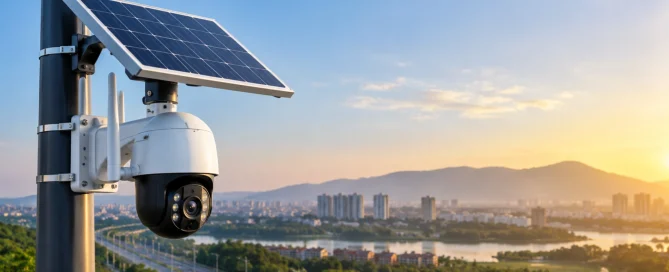
Even remote sites require monitoring if there are no electrical connections. When selecting a solar CCTV camera manufacturer in Pune, it is necessary to consider the amount of sunlight, the capacity of the battery, and mobile signal coverage. Starka Solar provides solar surveillance solutions.

Can solar CCTV work without grid electricity or Wi-Fi?

Yes, as long as it is properly set up, the panel and battery system provide power and the 4G SIM allows for remote monitoring in areas where mobile coverage is available. 

What Is a Solar CCTV Camera and How Does It Work Off-Grid?

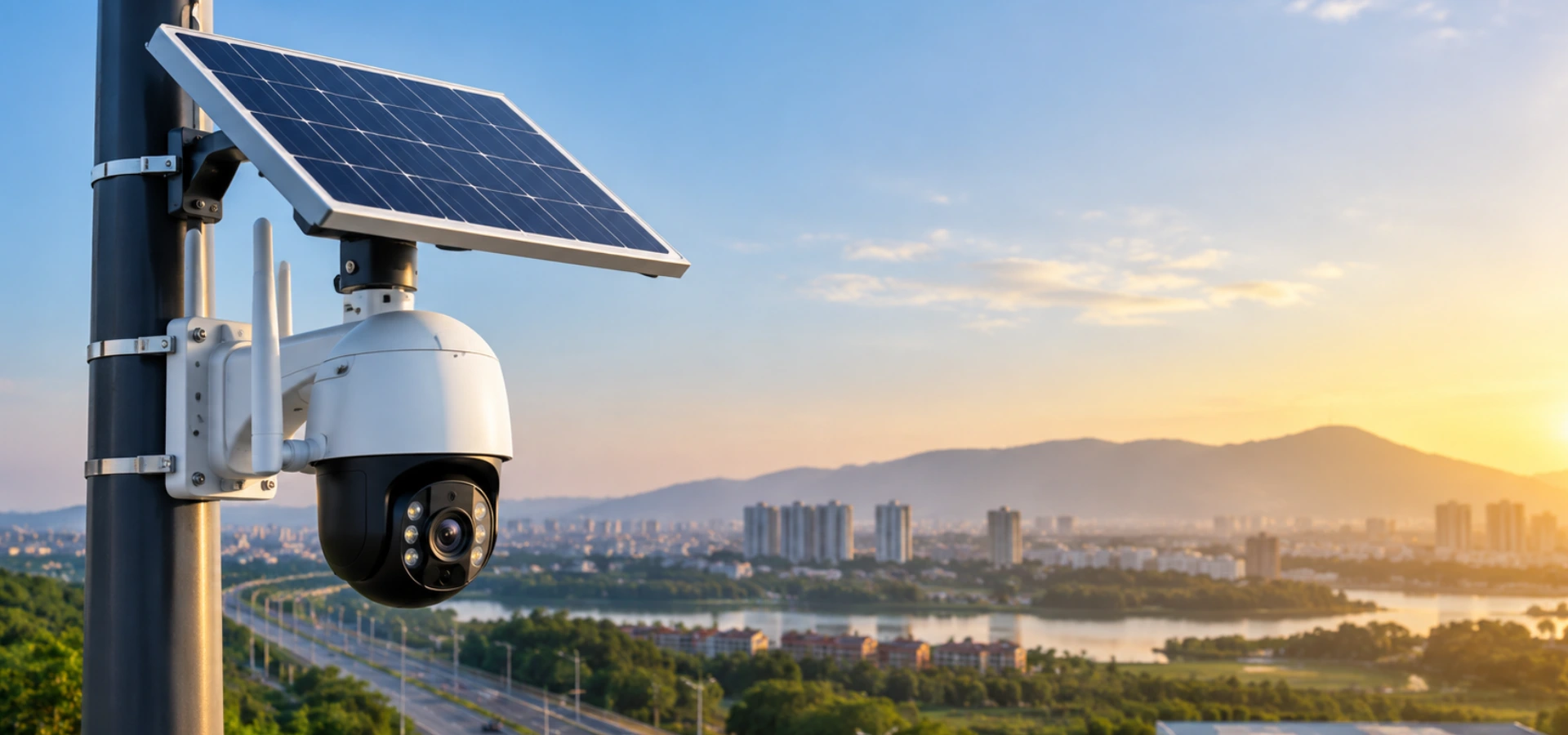
A solar CCTV camera charges its battery using sunlight. The energy chain is solar panel → MPPT controller → LiFePO4 battery → camera. 4G supports remote viewing; stored energy powers night operation. 

Why Pune Needs Solar CCTV Cameras for Public Safety in 2026

The need for surveillance goes beyond buildings. The Bridge Chronicle stated that there are about 619 cameras at 178 separate sites as part of Pune’s Safe City programme. Punekar News mentioned plans to have over 3,500 cameras in use during Ganeshotsav 2026. However, neither of the reports states that these camera networks are powered by solar energy. 

Remote Sites Around Pune Where Solar CCTV Cameras Work Best

Sites lacking electrical connections need sunlight and coverage checks.

Site type Common risk Why solar CCTV fits
Farms and farmhouses Intrusion Independent power
Agricultural land Trespassing Boundary monitoring
Solar plants Equipment theft Remote coverage
Highways and roads Unobserved activity Standalone installation
Construction sites Material theft Relocatable equipment
Open plots and perimeters Unauthorised entry Fewer electrical cables
Schools, colleges and institutions Boundary breaches Outdoor monitoring

Solar CCTV for Public Spaces: Roads, Ghats, Parks and Riverbanks

The municipal and police teams can identify appropriate locations, checking the mounting, coverage and platform compatibility. Motion alerts will enable the staff to respond. The flood risk and access for maintenance should also be assessed. Pair cameras with solar street lights in Pune for night visibility

Features to Check Before Buying a Solar CCTV Camera in Pune

Compare configurations rather than headline specifications:

  • 4G coverage and SIM compatibility.
  • LiFePO4 battery and MPPT controller.
  • Suitable panel capacity and certification.
  • Night vision and usable identification range.
  • Motion detection and optional analytics.
  • Two-way audio.
  • Micro SD and cloud storage options.
  • Weatherproof housing and cloudy-day autonomy.

Solar CCTV vs Wired CCTV: Which Is Better for Remote Sites?

Solar suits difficult power connections; wired systems suit established infrastructure.

Factor Solar CCTV Wired CCTV
Power source Panel and battery Grid or backed-up supply
Cabling and digging Reduced electrical cabling Route-dependent
Power cuts Battery-dependent Requires backup
Internet needed For remote viewing For remote viewing
Relocation Usually easier Cabling may need reworking
Running cost Data, upkeep, replacements Electricity, upkeep, connectivity
Best for Suitable remote sites Serviced buildings

Starka Solar-Powered IP CCTV Camera: Built for Off-Grid Sites in Pune

The system features 4G, LiFePO4 storage and MPPT charging; it includes night vision and allows for mobile monitoring so that supervision can be carried out, and we state that the battery backup amounts to about two or three days; however, the actual autonomy will vary according to the configuration, usage and charging conditions. 

How to Choose a Solar CCTV Camera Manufacturer or Supplier in Pune

If you are comparing manufacturers of solar-powered IP CCTV cameras in Pune, you should check their manufacturing credentials, look at their project references and examine their service arrangements. A supplier of solar CCTV cameras in Pune must give you written specifications, details regarding the warranty and the scope of installation. Make sure to check the amount of sunlight and the mobile signal before making a decision. 

Solar CCTV Camera Price in Pune: What Decides the Cost?

Camera, panel, battery, pole, storage, installation and quantity affect quotations. Request site-specific pricing covering hardware, installation and subscriptions.

FAQs

Does a solar CCTV camera work during Pune’s monsoon?

Yes, if charging conditions, battery sizing and weather protection support the required operating load.

Can a solar CCTV camera work without Wi-Fi or electricity?

Yes, solar power and compatible 4G connectivity can replace grid electricity and Wi-Fi.

How does a solar CCTV camera record at night?

Stored battery energy powers the camera and its night-vision functions.

Can I watch solar CCTV footage live on my phone?

Yes, with remote-viewing software, connectivity and an active data plan.

Which places in Pune need solar CCTV cameras the most?

Remote sites without convenient power connections are candidates after assessment.

By |2026-10-23T21:39:49+05:30October 23, 2026|Solar Lights|0 Comments

Best Solar Street Light Manufacturer in India: What Should Buyers Look For?

Choosing the best solar street light manufacturer in India is less about finding the lowest quotation and more about verifying what sits behind the product. A dependable manufacturer should offer in-house production, relevant test reports, clearly written warranty terms, application-specific lighting solutions and evidence of completed projects.

For buyers evaluating a solar street light manufacturer in Pune, manufacturing capability and after-sales support should come before price alone. A solar street light manufacturer in Mumbai should also be assessed on product specifications and service reach. Buyers looking for a solar street light manufacturer in Maharashtra can source directly from Starka’s manufacturing facility in Amravati MIDC.

Which are the leading solar lighting manufacturers in India?
Leading manufacturers combine in-house production with certified components, documented testing, clear warranties, application-specific products and a proven supply record across government, industrial and commercial projects.

What Makes the Best Solar Street Light Manufacturer in India?

A reliable manufacturer should make it easy for buyers to verify what they are purchasing. Before placing a bulk, institutional or infrastructure order, check six areas:

  1. In-house manufacturing capability
  2. Relevant certifications and test reports
  3. Quality of panels, batteries and LEDs
  4. Product range for different applications
  5. Written warranty and service conditions
  6. Proven project and supply track record

When shortlisting a solar street light manufacturer in Pune, ask for technical documentation before comparing quotations.

A capable solar street light manufacturer in Maharashtra should be able to explain why a particular wattage, battery capacity and lighting configuration suits your site.

In-House Production: Lights and Lithium Batteries

The lithium battery is one of the most important components of an off-grid solar lighting system. Knowing who makes it can therefore matter as much as knowing who assembles the luminaire.

Founded in 2017, Starka has operated an in-house LiFePO₄ battery manufacturing unit since 2020. Its manufacturing facility at Amravati MIDC has been operational since 2025, with a stated production capacity exceeding 300 lights per day.

This vertically integrated approach strengthens Starka’s position in all-in-one LED solar street light manufacturing in Maharashtra.

Buyers comparing a solar street light manufacturer in Mumbai should ask two straightforward questions: Where is the factory located? Is the lithium battery manufactured in-house or sourced from another supplier?

Clear answers make supplier evaluation easier.

Certifications and Test Reports to Verify

Certifications should not appear only as logos in a brochure. Buyers should request the underlying documents and confirm that they apply to the relevant product or component.

For a semi-integrated solar street light manufacturer, useful checks include BIS documentation for applicable solar panels, LM-79 performance reports for luminaires and LM-80 information for LED packages. IP65 or IP66 ratings help establish protection against dust and water ingress, while ERDA battery testing can provide additional technical validation.

ISO 9001 and ZED  Gold credentials can also provide context on manufacturing and quality processes. Buyers evaluating a decorative solar street light manufacturer should apply the same diligence rather than treating decorative products as purely aesthetic fixtures.

ALMM is different from a general street-light certification. It is an MNRE framework covering approved models and manufacturers of solar PV modules and solar PV cells, so buyers should check its applicability to the PV components and procurement requirements of their project.

The Right Range for Every Application

A highway, industrial compound, village road and landscaped garden do not need the same fixture. The right manufacturer should therefore offer solutions based on application rather than pushing one product everywhere.

All-in-One Solar Street Light

An all-in-one solar street light integrates key components into a compact lighting solution suitable for applications such as roads and industrial areas.

Starka’s range spans approximately 9W to 70W with monocrystalline panels, MPPT charging and luminous efficacy of at least 120 lm/W. Selected configurations include motion-based brightening, BMS protection and IP65/IP66 protection with IK08 impact resistance.

The right wattage should be selected after considering road width, pole height, required illumination and operating hours.

Semi-Integrated Solar Street Light

A semi-integrated solar street light keeps the panel separately adjustable, which can help optimise solar orientation for the installation site.

Starka’s range covers approximately 9W to 30W with an adjustable BIS-compliant panel, MPPT charging and up to 12 hours of stated backup depending on the system configuration.

For buyers considering a semi-integrated street light, the separate panel can provide additional installation flexibility.

A project sourcing through a solar street light manufacturer in Pune should still verify the proposed system design against actual site conditions.

Decorative Solar Street Light

A decorative solar street light combines outdoor illumination with a more design-conscious fixture, making it suitable for landscaped environments, housing societies and public spaces.

Starka offers configurations ranging from approximately 9W × 2 to 25W × 2 with MPPT charging, automatic dusk-to-dawn operation and up to 12 hours of stated backup.

For solar street lights for parks and gardens, buyers should consider illumination quality alongside fixture design.

Projects sourcing from a solar street light manufacturer in Mumbai should also confirm pole design, battery capacity and expected operating conditions before ordering.

High Mast and Complete Lighting Range

Large outdoor environments may require a solar high mast rather than conventional street-light spacing. A solar high mast light manufacturer should assess mounting height, coverage requirements and site characteristics before proposing a system.

When comparing a solar high mast light company, buyers should also examine structural specifications and component quality.

For mixed infrastructure requirements, Starka’s portfolio extends to AC LED street lights, AC high mast systems, AC flood lights and emergency solar flood lights. This allows industrial, highway and large-area projects to source multiple lighting categories from one manufacturer.

Warranty, Installation and Price Transparency

Warranty terms deserve the same attention as product specifications. Starka offers warranty plans of 2 or 5 years depending on the applicable product and commercial terms.

Buyers should understand exclusions before ordering. Repairs may be handled through the company’s main office, while on-site service can carry additional charges. Installation is charged separately, with installation guidance available and pan-India installation support offered where required.

A semi-integrated solar street light price depends on specifications rather than one universal figure.

Similarly, an all-in-one solar street light price list can change according to wattage, battery capacity, panel size, pole requirement and project quantity.

Ask for a detailed quotation instead of comparing only the headline price.

Proven Supply Across Pune, Mumbai and Maharashtra

Manufacturing capability becomes more meaningful when supported by actual deployment experience.

Starka states that it has supplied more than 300,000 lights across 26+ Indian states. Its Maharashtra project experience includes locations such as Baramati in Pune district, Wardha and Amravati.

The company supplies Pune and Mumbai while manufacturing from its Maharashtra facility. It is also a GeM seller and highlights project experience and testimonials connected with public-sector infrastructure work, including PWD Rajasthan.

For buyers looking for an all-in-one solar street light supplier in Pune, this provides a broader track record to examine.

Those evaluating a decorative solar street light supplier in Pune should still request examples relevant to their particular application.

The same principle applies when selecting a solar high mast light manufacturer in Mumbai: ask for specifications, installation scope and comparable project proof before placing an order.

FAQs

1. Which are the top solar street light manufacturers in Maharashtra?

The right manufacturer should offer verified manufacturing capability, relevant testing, warranties and project proof, with Starka being a Maharashtra-based option supplying multiple solar lighting categories.

2. Which companies supply solar street lights in Pune?

Starka supplies solar street lighting solutions to Pune from its Maharashtra manufacturing base, with options for roads, industries, public spaces and commercial projects.

3. Who is a reliable all-in-one solar street light manufacturer in Mumbai?

Starka supplies Mumbai with all-in-one systems featuring LiFePO4 batteries, MPPT charging and multiple wattage options for different outdoor applications.

4. Who is a reliable semi-integrated solar street light manufacturer in Maharashtra?

Starka manufactures semi-integrated systems with separate adjustable panels, MPPT charging and multiple wattage configurations for road and public-lighting applications.

5. Which companies manufacture decorative solar street lights for parks and gardens?

Starka offers decorative solar lighting in multiple configurations designed for parks, gardens, societies and other outdoor spaces requiring illumination with visual appeal.

6. Which solar street lights offer MPPT, dusk-to-dawn and 12 hours of backup?

Starka’s relevant semi-integrated and decorative ranges include MPPT-based charging, while selected decorative configurations provide dusk-to-dawn automation and up to 12 hours of stated backup.

7. What is the price of all-in-one and semi-integrated solar street lights?

Pricing depends on wattage, battery capacity, solar panel, pole specifications, quantity and installation requirements, so buyers should request a project-specific quotation.

8. Which manufacturers make solar high mast lights for highways and large areas in Maharashtra?

Starka offers solar high mast solutions for large outdoor applications, with system selection based on required coverage, mounting height and site conditions.

Conclusion

Before selecting a manufacturer, watch for five red flags: unclear factory details, missing test reports, vague warranty conditions, one-size-fits-all specifications and no verifiable project history.

For buyers seeking a solar street light manufacturer in Maharashtra, Starka combines in-house manufacturing, LiFePO4 battery production, multiple lighting categories and pan-India supply capabilities. Discuss your road, industrial, commercial or public-space lighting requirements with Starka at https://starkasolar.com/.

By |2026-10-08T11:56:45+05:30October 8, 2026|Solar Lights|0 Comments

Top Benefits of Solar Street Lights for Smart Cities in India

A smart city is not only defined by digital systems. It is also shaped by infrastructure that works efficiently every day without placing unnecessary pressure on conventional resources. Solar street lights support this goal by combining renewable energy with reliable outdoor illumination.

What are the benefits of solar street lights for smart cities in India?
They can reduce grid dependence and electricity bills while enabling faster installation, outage-resilient lighting, automated operation, safer public spaces, application-specific illumination and cleaner urban infrastructure.

India already has a strong foundation for smarter urban infrastructure. As of May 9, 2025, 94% of 8,067 projects under the Smart Cities Mission had been completed and all 100 Smart Cities had operational Integrated Command and Control Centres. Buyers working with a solar street light manufacturer in Maharashtra can therefore look beyond basic illumination towards systems suited to increasingly technology-led urban environments.

Why Smart Cities in India Are Turning to Solar Street Lights

Smart-city infrastructure has to balance efficiency, sustainability and dependable public services. This is where solar street lights in India have a practical role.

Visakhapatnam provides a useful real-world example. Under its Smart City programme, 380 standalone solar streetlights and 200 solar post lights were installed across locations including a five-kilometre beach stretch and the Area-Based Development zone.

The project demonstrates how solar lighting can serve public spaces while reducing dependence on conventional electricity infrastructure.

Municipal bodies and contractors sourcing through a solar street light manufacturer in Pune should evaluate products according to the road, public-space and operating conditions of each project.

Benefit 1: Zero Electricity Bills and Lower Lifecycle Cost

Once installed, standalone solar street lights generate their operating energy through solar panels instead of drawing routine electricity from the grid. This can eliminate grid electricity consumption for the light itself while reducing dependence on conventional power infrastructure.

Lifecycle economics also depend heavily on battery quality. LiFePO4 batteries are commonly used in modern systems because of their cycle life and suitability for repeated charging and discharging.

When evaluating a solar street light manufacturer in Mumbai, buyers should compare battery chemistry, expected life, replacement terms and warranty coverage rather than judging cost only by the initial quotation.

Benefit 2: Faster Installation Without Trenching

Traditional street lighting may require underground cabling, trenching and connection to electrical infrastructure. Standalone solar systems can reduce this dependency, making deployment useful where extensive civil work would be difficult or disruptive.

A properly designed solar light pole can house or support the luminaire, solar panel and associated components as an independent system.

Certain installations may also make use of suitable existing poles, subject to structural compatibility and system requirements.

A solar street light manufacturer in Maharashtra should assess pole height, road width, solar exposure and lighting requirements before recommending a configuration.

Benefit 3: Lights Stay On During Power Cuts

Because standalone solar lighting stores solar energy in its battery, its operation does not depend on continuous grid availability. This makes off-grid street lighting relevant for public areas where lighting continuity is important.

The same principle can support critical zones through an emergency solar flood light, providing independent illumination where conventional electrical access may be unavailable or interrupted.

For municipal, institutional and industrial projects, a solar street light manufacturer in Pune should size the battery and solar panel according to expected operating hours, local conditions and required autonomy.

Benefit 4: Smart Automation That Saves Energy

Modern solar lighting can do more than switch on and off.

An All in one solar street light can combine automatic dusk-to-dawn operation with MPPT charging and intelligent energy management. Selected Starka systems also use motion-based brightening, allowing illumination levels to respond to activity.

A smart solar street light can therefore conserve stored energy when full brightness is unnecessary while increasing output when movement is detected.

Certain decorative and semi-integrated configurations are designed to provide around 12 hours of backup under specified operating conditions.

For projects in Pune, buyers should confirm the exact automation logic, backup specification and battery sizing for the selected model.

Benefit 5: Safer Streets and Surveillance-Ready Infrastructure

Lighting and surveillance increasingly form complementary parts of public-space planning.

A solar CCTV camera can extend monitoring to locations where dependable grid power or wired connectivity is difficult. Starka’s solar CCTV solutions include 4G and Wi-Fi connectivity with remote monitoring through app or web interfaces. Selected configurations can also support optional AI-based detection with battery backup designed for approximately two to three days, depending on system conditions.

India’s Smart Cities Mission has already placed technology at the centre of urban management, with operational ICCCs across all 100 Smart Cities.

However, buyers should never assume that a particular solar lighting or CCTV system automatically integrates with an ICCC. Compatibility with the city’s command-centre architecture, software and communication protocols should be confirmed before procurement.

Benefit 6: The Right Fixture for Every Smart-City Zone

One lighting format cannot efficiently serve every urban environment.

Highways and large junctions may require wide-area illumination from a solar high mast. A capable solar high mast light manufacturer should design the system around mounting height and required coverage.

For major road applications, an LED street light for highways should be selected according to roadway geometry and illumination requirements.

A semi integrated solar street light can suit city roads where separate panel positioning provides useful installation flexibility.

A decorative solar street light can combine illumination with visual character in landscaped public areas.

For solar street lights for parks and gardens, fixture design becomes part of the public-space experience.

Lighting for industrial areas may prioritise coverage, reliability and security. Systems for commercial projects may place additional emphasis on appearance and ease of deployment.

Matching the fixture to the zone is one of the most important decisions in any city-scale lighting project.

Benefit 7: Cleaner Cities and Climate Goals

Solar lighting replaces routine grid electricity consumption for standalone street lights with locally generated renewable energy.

At city scale, this can support broader sustainability goals by reducing dependence on conventional electricity sources. It can also help municipalities introduce renewable-energy infrastructure directly into roads, public spaces, parks and other urban environments.

For Maharashtra’s growing cities, the environmental value becomes stronger when solar lighting is combined with efficient LEDs, durable batteries and intelligent energy management.

What to Check Before a Smart-City Solar Lighting Project

Before procurement, project teams should check four fundamentals:

  • Relevant product certifications and test reports
  • Battery chemistry, capacity and protection systems
  • Written warranty and maintenance conditions
  • Compatibility requirements for smart-city monitoring or command-centre systems

A solar street light manufacturer in Pune should be able to explain the technical reasoning behind the proposed system. Buyers sourcing through a solar street light manufacturer in Mumbai should expect the same transparency. For large Maharashtra projects, manufacturing capacity and after-sales support also deserve close evaluation.

FAQs

1. What are the main benefits of solar street lights for smart cities in India?

They can reduce grid dependence, electricity costs and cabling requirements while supporting automated lighting, outage resilience, public safety and cleaner urban infrastructure.

2. Are solar street lights more cost-effective than grid street lights?

They can lower long-term electricity and cabling costs, but overall lifecycle value depends on battery life, product quality, installation conditions and maintenance.

3. Do solar street lights work during the monsoon in Pune and Mumbai?

Yes, properly sized systems can operate during monsoon conditions using stored battery energy, although backup depends on solar availability, battery capacity and system design.

4. Can solar street lights connect to a smart city’s command and control centre?

Some smart lighting systems can support remote connectivity, but ICCC integration depends on compatible hardware, communication protocols and the individual city’s command-centre architecture.

5. Which type of solar street light suits smart-city roads, parks and highways?

All-in-one or semi-integrated lights can suit roads, decorative fixtures can serve parks and solar high mast systems can provide broader coverage for highways or large spaces.

6. Which Maharashtra companies manufacture solar street lights for city projects?

Starka manufactures solar lighting systems in Maharashtra and offers all-in-one, semi-integrated, decorative, high mast and other outdoor lighting solutions for varied applications.

7. What is the installation cost of a solar light pole in Pune?

Installation cost depends on pole height, foundation, fixture type, battery, solar panel, site conditions and quantity, so a site-specific quotation is required.

8. Do solar street lights need regular maintenance?

Yes, periodic cleaning and component checks are advisable, while applicable maintenance support depends on the manufacturer’s written warranty and service terms.

Conclusion

For smart-city projects, the right solar solution should combine reliable components, appropriate battery technology, clear warranty terms and compatibility with the intended urban application.

Starka offers solar lighting solutions for roads, public spaces, industrial sites and large-area projects while supplying Pune, Mumbai and locations across Maharashtra. To discuss your smart-city or infrastructure lighting requirements, visit https://starkasolar.com/.

By |2026-10-08T11:51:12+05:30October 8, 2026|Solar Lights|0 Comments

How to Choose the Right Solar Street Light for Highways, Roads and Public Spaces

How do you choose the right solar street light for highways, roads and public spaces? Highways generally require 60 to 120W systems with taller poles, roads typically need 30 to 60W systems and public spaces often work well with 12 to 30W fixtures. The right choice should also consider lumens, pole height, battery technology, road width, lighting design and applicable MNRE, BIS and ALMM requirements.

Outdoor lighting looks simple only until the wrong specification reaches the site.

A light that works perfectly for a residential road may not provide sufficient visibility on a highway. A system designed for a large carriageway may be unnecessarily powerful and expensive for a park or public plaza. That is why choosing the right solar street light should begin with the application, not simply with the wattage printed on the product.

Across India, infrastructure planners, municipalities, developers and public agencies are increasingly exploring solar lighting for highways, urban roads, campuses and public spaces. The appeal is clear. Solar-powered systems can reduce dependence on grid electricity, simplify installations in suitable locations and support wider sustainability goals.

However, a solar street light for highways must meet very different performance expectations from one installed on a footpath or in a landscaped park.

This guide explains how to select the right system for each environment and what technical factors to check before procurement.

Why Solar Street Light Selection Differs by Application

There is no single street-lighting specification that works equally well everywhere.

The right system depends on how the space is used, how much visibility it requires and how critical the lighting is to safety.

A solar street light for roads must account for vehicle speed, lane width, pedestrian movement, pole spacing and surrounding ambient light.

A solar street light for public spaces may need to balance functional illumination with visual comfort and design aesthetics.

Some of the most important factors include traffic density, road width, mounting height, illumination level, beam spread, operating hours and surrounding darkness.

Battery capacity also matters because the lighting system must store enough solar energy during the day to provide dependable illumination at night.

Solar irradiation at the installation location should also be considered. Shading from trees, nearby buildings, or infrastructure can affect charging performance and therefore influence system sizing.

The goal is not to install the most powerful light available. It is to install the right lighting system for the intended environment.

Solar Street Lights for Highways

Highways are among the most demanding locations for outdoor lighting.

Vehicles travel at significantly higher speeds and motorists require good visibility to identify lane markings, turns, intersections and potential hazards.

For this reason, selecting a solar street light for highways requires careful attention to light output, pole height, optical distribution and system reliability.

Recommended Wattage and Lumens

For many highway applications, systems in the range of approximately 60 to 120W may be considered depending on the width of the carriageway, pole spacing and required illumination.

Projects requiring stronger illumination can consider systems delivering approximately 8,000 lumens or more, depending on lighting calculations and specifications.

Wattage alone, however, should not determine performance.

Two 100W street lights can produce different results depending on LED efficiency, optical design and the quality of their components.

For larger carriageways, junctions, toll areas and wide infrastructure zones, a solar high mast light can provide wider illumination coverage from an elevated mounting position.

High-mast systems can also reduce the number of individual poles required in certain large-area applications when supported by an appropriate lighting design.

Pole Height

Highway installations generally require taller poles than urban streets.

Pole heights can typically begin around 8 metres and can extend towards 20 metres for high-mast applications or wide infrastructure stretches.

The exact height should depend on carriageway width, fixture output, road geometry and required lux levels.

For expressways and NHAI-related infrastructure, the lighting design should always follow the specifications prescribed for the project rather than relying on a generic pole-height recommendation.

MNRE, BIS and ALMM Requirements for Highway Projects

Compliance becomes especially important when solar lighting forms part of a government tender or public infrastructure project.

MNRE publishes specifications related to solar street-lighting systems, including specifications covering performance requirements for solar lighting components. 

An ALMM solar street light requirement should also be interpreted correctly.

ALMM does not certify the complete street-light fixture. It identifies approved models and manufacturers of solar PV modules and solar PV cells. MNRE’s current framework includes List-I for PV modules and List-II for PV cells. 

For applicable government projects, buyers should therefore check whether the solar PV modules proposed for the system meet the latest ALMM requirements specified in the tender.

Other applicable BIS standards, testing requirements and technical tender conditions should also be reviewed before procurement.

Solar Street Lights for Arterial and Residential Roads

Urban roads require a more balanced lighting solution.

These streets generally carry slower traffic than highways, but they may have greater interaction between vehicles, pedestrians, cyclists and nearby residential or commercial activity.

A solar street light for roads in these environments should therefore deliver sufficient visibility without unnecessarily oversizing the system.

Recommended Wattage and Pole Height

For arterial and residential roads, systems between approximately 30 and 60W can suit many applications.

Pole heights usually fall within the 6 to 8 metre range.

The exact configuration depends on factors such as road width, fixture spacing, traffic movement and the required illumination level.

When selecting a solar street light for Pune infrastructure projects, durability should also be considered because systems may need to withstand heavy monsoon conditions, dust and seasonal weather changes.

For a solar street light Mumbai project, resistance to rainfall, humidity and long-term outdoor exposure becomes equally important.

Appropriate IP-rated enclosures can help protect critical electrical components against dust and water ingress.

LiFePO₄ Battery vs Lead-Acid Battery

  • Battery technology is one of the most important parts of a solar lighting system.
  • It determines how effectively energy generated during the day is stored and delivered after sunset.
  • LiFePO4 batteries have become increasingly popular in modern solar lighting systems because they offer a comparatively high cycle life, good thermal stability and compact installation.
  • They also generally require less routine maintenance than traditional lead-acid batteries.
  • Lead-acid batteries may offer a lower upfront price in some systems, but buyers should also consider replacement cycles, maintenance and total cost over the operating life of the project.
  • For roads expected to operate reliably for years, the battery decision should therefore be based on lifecycle performance rather than purchase price alone.

Solar Lighting for Public Spaces: Parks, Squares and Footpaths

Lighting public spaces is not just about visibility.

It also influences how welcoming, comfortable and usable an environment feels after sunset.

A solar street light for public spaces can be considered for gardens, campuses, pathways, promenades, plazas and recreational environments.

Unlike highways, these locations usually do not require extremely high-output fixtures.

Instead, design quality, visual comfort and appropriate light distribution become equally important.

Decorative and All-in-One Fixtures

For many public-space applications, approximately 12 to 30W lighting systems can provide a practical starting range.

Pole heights typically fall between 4 and 6 metres depending on the area being illuminated.

A decorative solar street light can also complement landscape architecture while providing functional lighting.

Decorative fixtures can be particularly effective around pathways, gardens, plazas and hospitality spaces where appearance contributes to the overall experience.

All-in-one systems are another option.

These fixtures typically combine major solar lighting components into a compact structure, helping create a neat and contemporary appearance.

Semi-integrated systems may be preferred when greater flexibility is required in positioning the panel, battery or fixture.

Comparison Table: Highway vs. Road vs. Public Space

The most suitable specification becomes easier to understand when the three primary applications are compared directly.

Application Wattage Pole Height Fixture Type
Highway 60–120W 8–20m Solar High Mast
Arterial Road 30–60W 6–8m Semi-Integrated/AC Street Light
Public Space 12–30W 4–6m All-in-One/Decorative


These values should be treated as practical reference ranges rather than fixed specifications.

A professional lighting design should still consider required lux levels, spacing, beam distribution, local solar conditions and site-specific safety requirements.

What Else Should You Check Before Selecting a Solar Street Light?

Choosing the correct application category is only the beginning. Several technical factors determine how well the system performs after installation.

Light Output and Efficiency

  • Do not compare products only by wattage.
  • Lumens indicate the amount of visible light produced by the fixture.
  • LED efficiency also determines how effectively electrical power is converted into useful illumination.
  • A lower-wattage fixture with better efficiency can sometimes perform better than a higher-wattage product with poor optical design.

Beam Distribution

  • The shape of the light beam matters as much as total output.
  • Road lighting should distribute light across the carriageway rather than concentrating it directly beneath the pole.
  • For wider roads, appropriate optics can improve uniformity and reduce dark zones between poles.

Solar Panel Capacity

  • The solar panel must generate enough energy during daylight hours to recharge the battery.
  • Its capacity should therefore match the power consumption of the fixture and the expected operating duration.
  • Sites with lower solar exposure may need larger panel capacity or revised system sizing.

Battery Backup

  • Solar lighting systems should be capable of operating through expected night hours and periods of reduced sunlight.
  • Battery autonomy becomes particularly important during monsoon periods or consecutive cloudy days.
  • Buyers should confirm battery capacity, expected backup duration and the operating logic of the controller.

Smart Lighting Controls

  • Modern solar street lights can also use programmable controllers or motion-based dimming.
  • For example, the fixture may operate at full brightness during peak hours and reduce output during periods of low activity.
  • Such controls can reduce energy consumption and extend battery runtime when appropriately designed.

Compliance Checklist Before You Buy

Technical compliance should be reviewed before issuing a purchase order, particularly for government or institutional projects.

An MNRE-approved solar street light should not be selected merely because a supplier uses that phrase in marketing material.

Instead, buyers should check the actual MNRE specifications and tender requirements applicable to the project.

MNRE currently lists specifications for solar street lights and related solar photovoltaic lighting systems.

For an ALMM solar street light requirement, buyers should verify the eligibility of the PV module and, where applicable, relevant PV cell requirements under the latest ALMM framework.

Before procurement, check:

  • Applicable BIS certification or testing requirements
  • Relevant MNRE technical specifications
  • ALMM status of applicable solar PV modules
  • IP65 or IP66 protection where required
  • LED performance and luminous efficiency
  • Battery chemistry and rated lifecycle
  • Solar panel capacity
  • Charge-controller specifications
  • Pole quality and structural design
  • Product and component warranties
  • Installation support
  • After-sales service

Government tender requirements can change by project and authority, so the latest tender documentation should always take priority.

Common Mistakes to Avoid When Buying Solar Street Lights

  • One of the most common mistakes is choosing a system based entirely on price.
  • A lower upfront cost does not necessarily mean better lifecycle value.
  • Battery replacement, fixture failures, poor illumination and higher maintenance requirements can make an initially inexpensive system much more costly over time.
  • Another mistake is selecting wattage without studying pole spacing.
  • Even a powerful fixture can create inconsistent illumination when poles are positioned incorrectly.
  • Ignoring solar exposure is equally risky.
  • A panel installed beneath tree cover or in persistent shade may not generate enough energy to fully recharge the battery.
  • Finally, buyers should avoid assuming that all products carrying similar wattage labels offer identical performance.
  • Component quality, optics, batteries, panels and control systems can vary substantially between manufacturers.

Why Proper Lighting Design Matters

  • Street-lighting design is ultimately about achieving the right amount of illumination in the right place.
  • On a highway, this can contribute to safer movement and better visibility at night.
  • On an arterial road, it can help motorists and pedestrians navigate more comfortably.
  • In public spaces, lighting can improve usability while supporting the character of the environment.
  • That is why project planners should consider lux calculations, pole spacing, fixture placement and lighting uniformity before finalising the product.
  • For large installations, a site-specific lighting plan can also help prevent both under-lighting and unnecessary over-specification.

Choosing a Reliable Solar Street Light Manufacturer

Product specifications are important, but the manufacturer behind the system also matters.

A reliable supplier should be able to explain the performance of the complete system rather than simply promoting fixture wattage.

Buyers should ask for technical specifications covering the LED fixture, solar panel, battery, controller and pole.

Warranty terms should also clearly mention which components are covered and for how long.

Project experience is another useful factor to consider because highway, municipal and public-infrastructure projects can involve very different technical requirements.

Starka offers solar lighting solutions designed for different outdoor applications and infrastructure requirements. Buyers can explore suitable configurations according to the scale, location and lighting needs of their project.

FAQs

1. What wattage solar street light is suitable for highways?

Highway applications commonly use approximately 60 to 120W systems depending on road width, pole spacing and illumination requirements.

2. What pole height is suitable for highway solar lighting?

Highway poles generally begin around 8 metres, while high-mast installations can extend towards 20 metres depending on the application.

3. What wattage is suitable for residential and arterial roads?

Approximately 30 to 60W systems are commonly considered for arterial and residential road applications.

4. Which battery is better for solar street lights?

LiFePO₄ batteries are widely preferred for modern systems because of their long cycle life, compact size and low maintenance requirements.

5. What type of solar street light is suitable for parks?

All-in-one or decorative fixtures in approximately the 12 to 30W range can suit many parks, pathways and landscaped spaces.

6. Are solar street lights suitable for government projects?

Yes, provided the system and its components meet the applicable tender specifications, MNRE requirements and relevant standards.

7. What does ALMM mean for solar street lights?

ALMM primarily applies to approved solar PV module and cell models and manufacturers rather than certifying the complete street-light fixture. 

Conclusion

Choosing the right solar lighting system begins with understanding where it will be installed.

Highways require higher output, taller poles and carefully planned light distribution. Urban roads need balanced illumination with reliable battery performance. Parks and public spaces can prioritise lower wattage systems, visual comfort and aesthetically designed fixtures.

The best solar street light is therefore not simply the one with the highest wattage. It is the system that matches the application, provides dependable illumination and uses appropriately specified components.

For large infrastructure projects, a Solar LED Highmast Light can provide effective coverage across wider areas when supported by proper lighting design.

Buyers should also review MNRE specifications and applicable ALMM requirements before finalising systems for government procurement.

For application-specific solar lighting solutions for highways, roads and public spaces, explore Starka’s product range and connect with the team at Starka Solar to identify a system suited to your project’s technical and operational requirements.


By |2026-09-24T18:34:13+05:30September 24, 2026|Solar Lights|0 Comments

Why Integrated Solar Street Lights Are the Smart Choice for Public Spaces

When planning lighting for a new project, picking the right system is a big decision. Traditional street lights require long cables, deep digging, and expensive monthly power bills. Integrated solar street lights offer a much simpler and smarter solution.

They capture energy from the sun during the day and store it safely for night use, completely removing the need for grid power and confusing wiring.

Top 3 Reasons to Switch:

  1. Smart Sensors: They turn on by themselves as soon as the sun goes down and turn off when morning arrives. You never have to worry about flipping a switch.
  2. Weather Ready: They are built tough to handle heavy rain, strong winds, and hot summer days without failing.
  3. Instant ROI: The upfront cost pays for itself very quickly because your electricity bills drop to zero.
  • Eco-Friendly: Reduces your community’s carbon footprint immediately.
  • Easy Upkeep: Maintenance is very easy, saving you time and headaches over the years.

It is a long-lasting investment that keeps your streets safe and bright.

How Solar High Mast Lighting Secures Large Industrial Yards 

Lighting up a massive factory yard or a busy highway intersection is not an easy job. Regular street lights simply cannot push light far enough to cover these large open spaces safely. This is where solar high mast lighting becomes the perfect tool for the job.

How High Mast Systems Win:

  1. Fewer Poles Needed: By mounting powerful lights high up in the air, a single pole can illuminate a huge area, reducing the total equipment you need to buy.
  2. Total Security: High mast systems provide a broad, even wash of bright light that removes dangerous shadows where accidents can happen.
  3. Blackout Proof: Because they are solar-powered, they keep working even if the main power grid goes down.
  4. Simple Setup: Installing these giant structures is surprisingly simple when you remove electrical cables from the plan.
  5. Cost Effective: There is no need to dig long trenches across your property, saving your business a massive amount of installation money.
  6. Safety First: Your operations can continue safely at night without any sudden blackouts slowing you down.
By |2026-09-24T18:34:13+05:30July 24, 2026|Solar Lights|0 Comments
Go to Top