

Choosing the right solar street light is not simply about wattage or brightness. Road width, sunlight exposure, installation requirements and long-term maintenance all influence how effectively a lighting system performs.
Which is better for Indian roads: semi-integrated or all-in-one solar street lights?
All-in-one models suit open roads and quick installations, while semi-integrated models offer greater flexibility in solar panel positioning.
The comparison of semi-integrated vs all-in-one solar street light systems is particularly relevant for municipal authorities, gram panchayats, housing societies and industrial developments.
Starka Solar manufactures both configurations for projects across Maharashtra and India.
Quick Answer: Semi-Integrated or All-in-One Solar Street Light?
The right choice depends primarily on sunlight availability and installation conditions. An all-in-one solar street light is ideal for open locations requiring quick installation. A semi-integrated solar street light offers greater flexibility when the panel must be positioned independently.
Here is a quick comparison:
- Best application: All-in-one suits open roads and gardens, while semi-integrated suits locations requiring flexible panel placement.
- Panel positioning: All-in-one has an attached panel, while semi-integrated uses a separately mounted panel.
- Installation: All-in-one requires fewer installation steps.
- Starka wattage: All-in-one ranges from 9W to 60W, while semi-integrated ranges from 9W to 40W, with higher options on request.
- Maintenance: Both require periodic cleaning and inspections.
What Is an All-in-One Solar Street Light?
An all-in-one solar street light combines the solar panel, LED luminaire, battery and charging controller within a compact assembly. This integrated design simplifies installation and reduces external wiring requirements.
Starka Solar’s all-in-one models include:
- 9W to 60W options, with customisation available.
- OSRAM LEDs offering 130 lm/W efficacy.
- LiFePO₄ batteries with approximately 2,000 charge cycles and battery management protection.
- MPPT charging controllers and PIR motion sensors.
- IP65-tested powder-coated aluminium bodies.
- Dusk-to-dawn operation and multiple dimming settings.
Their compact construction makes them suitable for residential roads, gardens, campuses and other locations with unobstructed sunlight.
What Is a Semi-Integrated Solar Street Light?
A semi-integrated solar street light combines the LED luminaire and battery within one unit while positioning the solar panel separately on the pole. This allows installers to adjust panel orientation according to site conditions.
Starka Solar offers models ranging from 9W to 40W, with 50W and 60W configurations available on request.
These lights feature OSRAM LEDs, LiFePO4 batteries, PIR sensors and IP65-tested die-cast aluminium bodies. Installation kits include the mounting arm, panel structure and required accessories.
The independent solar panel makes this configuration particularly useful where surrounding trees or buildings affect sunlight exposure.
Semi-Integrated vs All-in-One: Side-by-Side Comparison
The fundamental difference between semi-integrated vs all in one solar street light systems is solar panel placement. Both provide independent solar-powered illumination, but their installation requirements and site suitability differ.
Design and installation: All-in-one models use a compact assembly with minimal external connections. Semi-integrated models require separate panel mounting and wiring.
Panel adjustment: Semi-integrated models offer independent panel orientation. All-in-one models have a panel integrated with the luminaire assembly.
Wattage: Starka’s standard all-in-one range extends to 60W. Its semi-integrated range extends to 40W, with higher configurations available on request.
Components: Both use LiFePO4 batteries, efficient OSRAM LEDs, motion sensors and weather-resistant aluminium bodies.
Backup and warranty: Performance depends on configuration and operating conditions. Starka offers a standard two-year warranty with extension options.
Road suitability: All-in-one models favour open locations, while semi-integrated models offer flexibility where solar exposure requires adjustment.
Which Performs Better in Indian Weather: Heat, Monsoon and Dust?
Both configurations can perform effectively in Indian conditions when properly sized, installed and maintained. The most important factors are solar exposure, battery capacity, charging efficiency and protection against environmental conditions.
Starka’s LiFePO4 batteries offer thermal stability, while MPPT controllers help manage available solar energy.
Under specified dimming settings, selected models are designed for approximately 12 hours of nightly operation, including five hours at full brightness followed by reduced output. Actual backup depends on sunlight and system configuration.
For Maharashtra projects:
- Keep panels free from shadows and accumulated dust.
- Clean solar panels approximately every three to six months.
- Consider corrosion-resistant mounting components in coastal environments.
- Orient panels appropriately for maximum sunlight exposure.
Semi-integrated systems provide additional flexibility in panel positioning, particularly where surrounding obstacles affect sunlight.
Which Solar Street Light Is Right for Your Road?
Selecting the best solar street light for Indian roads requires evaluating road width, lighting requirements, pole height and available sunlight. Higher wattage alone does not guarantee better illumination.
Village Lanes and Housing Societies
Compact solar lighting systems can suit smaller internal roads, depending on required brightness and pole spacing.
Parks and Gardens
All-in-one models are convenient for open recreational spaces because of their compact design and straightforward installation.
For park entrances and walkways, a decorative solar street light adds style.
Industrial and Commercial Roads
MIDC campuses and wider internal roads may require higher-output systems with appropriate mounting heights and lighting distribution.
For yards and loading bays, pair them with LED floodlights for warehouses.
Highways and Toll Plazas
Highway lighting requires project-specific engineering. Starka’s NHAI-oriented configuration includes a 120W luminaire on a 9-metre octagonal pole, with stated design parameters of 40 lux and a maximum 20-metre pole spacing.
These specifications must be validated against the applicable project requirements.
Recommended wattage and pole height should always be confirmed through a technical lighting assessment.
Choosing Solar Street Lights for Pune, Mumbai and Maharashtra Projects
Maharashtra’s varied urban and industrial environments require site-specific solar lighting solutions. A solar street light manufacturer in Pune should help buyers evaluate sunlight availability, mounting requirements and long-term maintenance before recommending a configuration.
For Pune and PCMC housing societies, all-in-one models may suit open internal roads.
Industrial developments in Chakan, Talegaon and Ranjangaon may require higher-output systems with robust mounting arrangements.
For shaded roads, semi-integrated configurations allow more flexible solar panel placement.
Mumbai’s coastal conditions also make corrosion resistance and secure installation important considerations.
Regardless of location, buyers should assess solar exposure, battery protection, installation security and after-sales support.
What Decides the Price of Semi-Integrated and All-in-One Lights?
Solar street light pricing depends on specifications rather than configuration alone. Wattage, battery capacity, panel size, pole type, order quantity and service requirements influence the final quotation.
Important cost considerations include:
- Battery and solar panel specifications.
- Pole height and mounting accessories.
- Installation and transportation requirements.
- Warranty coverage and annual maintenance support.
Starka offers a standard two-year product warranty with extension options up to five years. Solar panel performance warranty terms may extend to 25 years, subject to applicable conditions.
For an accurate quotation, buyers should share the required wattage, quantity, installation location and PIN code.
How to Install and Maintain Each Type
All-in-one systems generally require fewer installation steps because their major components are integrated. Semi-integrated systems involve additional solar panel mounting and electrical connections.
All-in-One Installation
- Prepare the foundation and install the suitable pole.
- Activate the unit according to the manufacturer’s instructions.
- Secure the luminaire and verify its operation.
Semi-Integrated Installation
- Prepare the foundation and secure the pole.
- Mount the luminaire and separate solar panel structure.
- Orient the panel towards suitable sunlight exposure.
- Complete battery and panel connections according to the installation manual.
- Check charging indicators and lighting operation.
Typical foundation requirements vary by pole design and soil conditions.
Maintenance Requirements
Clean panels every three to six months, inspect operating indicators monthly and check battery and panel performance periodically.
Starka also provides service support and spare-part assistance.
Buyer and Tender Checklist: Specs to Check Before You Order
Before selecting solar street lights for municipal, commercial or industrial projects, buyers should verify technical specifications and supporting documentation.
Important checks include:
- Applicable MNRE approvals for specific models.
- BIS-related battery and solar panel documentation.
- LM-79 and LM-80 testing documentation.
- IP65 ingress protection.
- LiFePO₄ battery chemistry and cycle life.
- MPPT charge controller specifications.
- LED efficacy and lighting performance.
- Pole approvals and structural suitability.
- Warranty terms and after-sales service.
Starka reports ISO certification and ZED Gold recognition. Buyers should request current documentation and verify its applicability to the proposed product.
Why Choose Starka Solar for Semi-Integrated and All-in-One Street Lights?
Starka Solar is a Maharashtra-based manufacturer offering both integrated and semi-integrated solar lighting systems for residential, commercial and public infrastructure applications.
With approximately ten years of industry experience, the company operates in-house manufacturing facilities at Amravati MIDC and reports supplying projects across more than 26 Indian states.
Its product offering includes branded components, customisation for tender requirements and warranty-backed service support.
For organisations comparing solar street lighting options, access to multiple configurations and technical guidance can simplify product selection.
Frequently Asked Questions
1. Which is better, a semi-integrated or an all-in-one solar street light?
All-in-one suits open roads and quick installation, while semi-integrated offers flexible solar panel positioning.
2. What is the difference between integrated and semi-integrated solar street lights?
Integrated models combine major components in one assembly, while semi-integrated models mount the solar panel separately.
3. How many hours of backup do Starka solar street lights give?
Selected models offer approximately 12 hours of operation under specified dimming settings and adequate charging conditions.
4. Do solar street lights work during the Pune monsoon?
Yes, appropriately sized systems can operate during monsoons, although reduced sunlight may affect charging and backup.
5. What wattages are available?
Starka offers 9W to 60W all-in-one models and 9W to 40W semi-integrated models, with custom options.
6. What is the price of a 60W all-in-one solar street light?
Pricing depends on battery capacity, panel specifications, pole requirements, quantity and warranty terms.
7. Which battery is used and how long does it last?
Starka uses LiFePO₄ batteries rated for approximately 2,000 cycles, with actual service life depending on usage conditions.
8. What warranty do Starka solar street lights carry?
The standard warranty is two years, with extension options up to five years and separate panel performance terms.
9. Which direction should the solar panel face?
In India, solar panels generally face south, with the optimal tilt determined by site conditions.
10. Who manufactures semi-integrated and all-in-one solar street lights in Maharashtra?
Starka Solar manufactures both configurations in Maharashtra and supplies projects across Pune, Mumbai and other Indian regions.
See all Starka Solar FAQs for warranty, installation and maintenance questions.
Conclusion
The comparison of semi-integrated vs all-in-one solar street light systems ultimately depends on road conditions, solar exposure and installation priorities.
All-in-one systems offer compact construction and convenient installation, while semi-integrated models provide greater flexibility in solar panel positioning.
For municipalities, contractors, housing societies and industrial developments, selecting the right configuration can support reliable lighting and manageable long-term maintenance.
Explore Starka Solar to compare solar street lighting solutions and request a project-specific quotation based on your wattage, quantity and installation requirements.
Related Posts
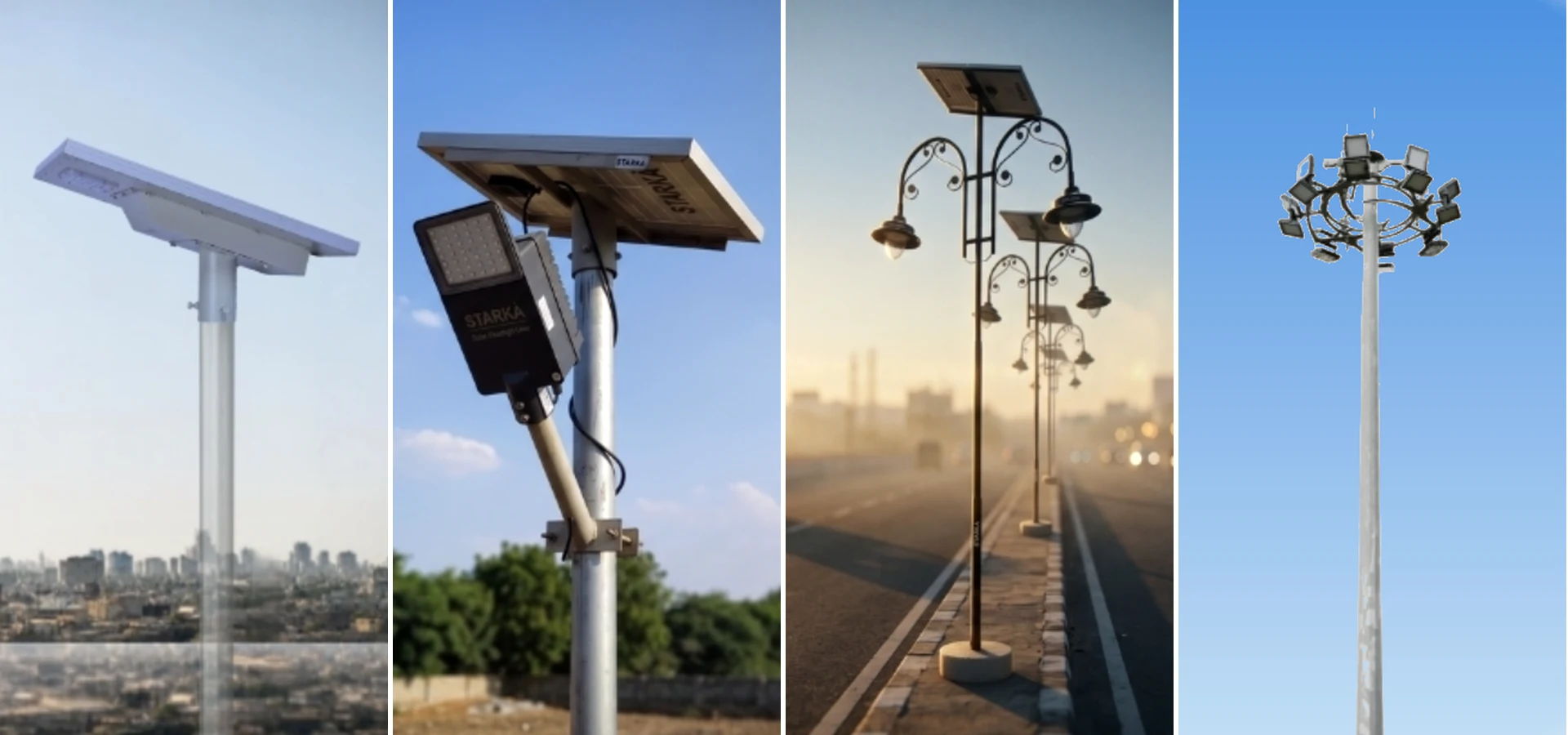
Types of Solar Street Lights in India: All-in-One vs Semi-Integrated vs Decorative vs High Mast
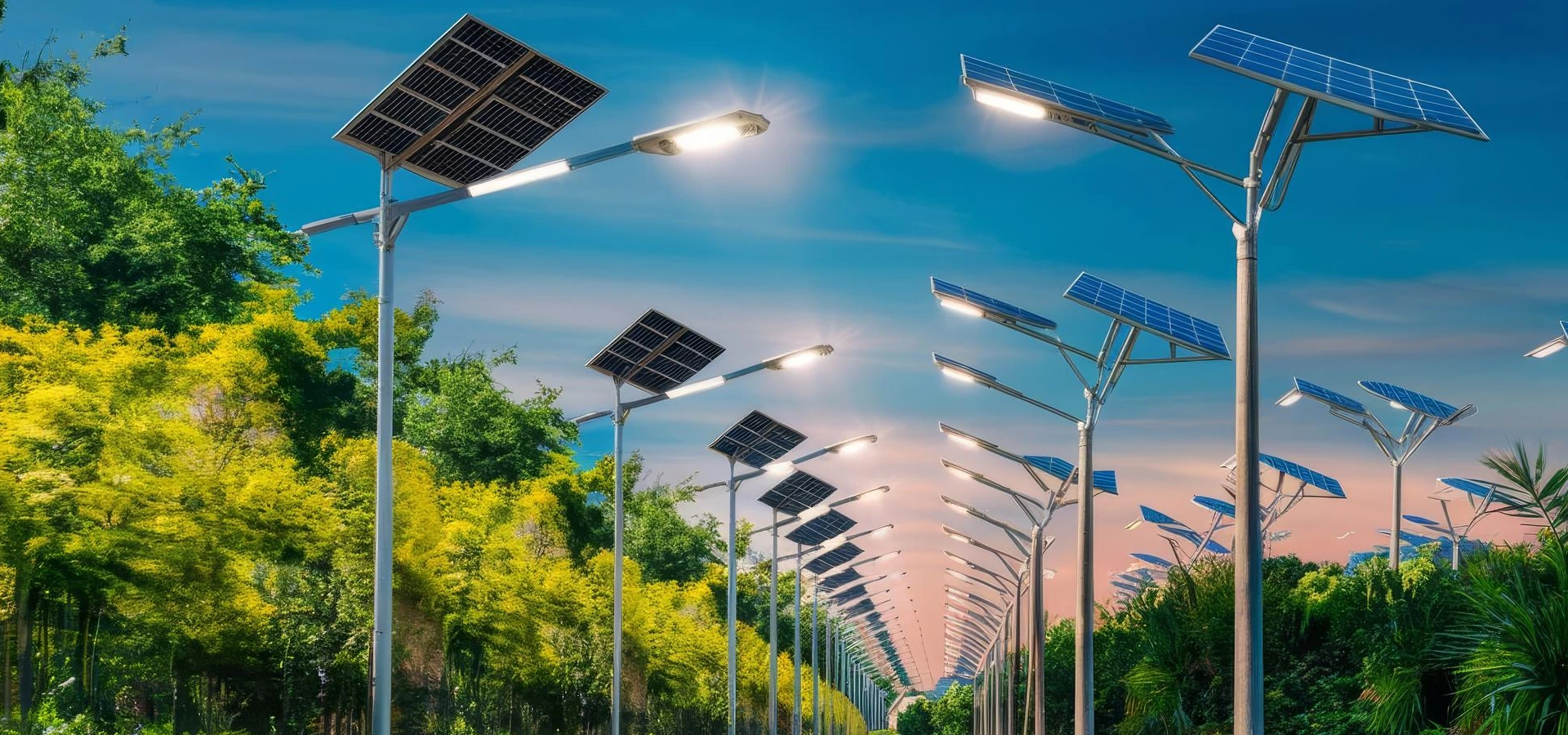
Semi-Integrated vs All-in-One Solar Street Lights: Which Is Better for Indian Roads?