

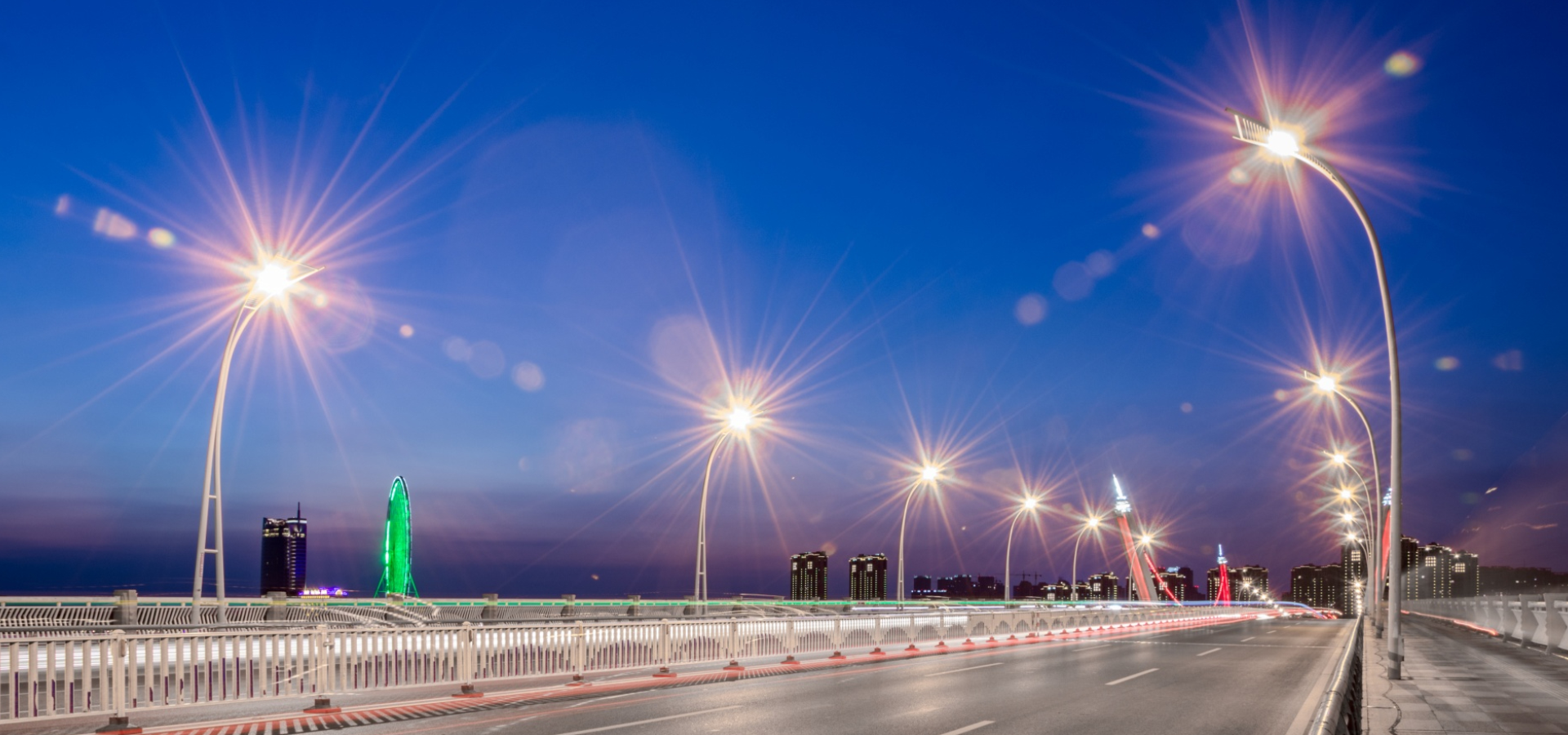
A smart city is not only defined by digital systems. It is also shaped by infrastructure that works efficiently every day without placing unnecessary pressure on conventional resources. Solar street lights support this goal by combining renewable energy with reliable outdoor illumination.
What are the benefits of solar street lights for smart cities in India?
They can reduce grid dependence and electricity bills while enabling faster installation, outage-resilient lighting, automated operation, safer public spaces, application-specific illumination and cleaner urban infrastructure.
India already has a strong foundation for smarter urban infrastructure. As of May 9, 2025, 94% of 8,067 projects under the Smart Cities Mission had been completed and all 100 Smart Cities had operational Integrated Command and Control Centres. Buyers working with a solar street light manufacturer in Maharashtra can therefore look beyond basic illumination towards systems suited to increasingly technology-led urban environments.
Why Smart Cities in India Are Turning to Solar Street Lights
Smart-city infrastructure has to balance efficiency, sustainability and dependable public services. This is where solar street lights in India have a practical role.
Visakhapatnam provides a useful real-world example. Under its Smart City programme, 380 standalone solar streetlights and 200 solar post lights were installed across locations including a five-kilometre beach stretch and the Area-Based Development zone.
The project demonstrates how solar lighting can serve public spaces while reducing dependence on conventional electricity infrastructure.
Municipal bodies and contractors sourcing through a solar street light manufacturer in Pune should evaluate products according to the road, public-space and operating conditions of each project.
Benefit 1: Zero Electricity Bills and Lower Lifecycle Cost
Once installed, standalone solar street lights generate their operating energy through solar panels instead of drawing routine electricity from the grid. This can eliminate grid electricity consumption for the light itself while reducing dependence on conventional power infrastructure.
Lifecycle economics also depend heavily on battery quality. LiFePO4 batteries are commonly used in modern systems because of their cycle life and suitability for repeated charging and discharging.
When evaluating a solar street light manufacturer in Mumbai, buyers should compare battery chemistry, expected life, replacement terms and warranty coverage rather than judging cost only by the initial quotation.
Benefit 2: Faster Installation Without Trenching
Traditional street lighting may require underground cabling, trenching and connection to electrical infrastructure. Standalone solar systems can reduce this dependency, making deployment useful where extensive civil work would be difficult or disruptive.
A properly designed solar light pole can house or support the luminaire, solar panel and associated components as an independent system.
Certain installations may also make use of suitable existing poles, subject to structural compatibility and system requirements.
A solar street light manufacturer in Maharashtra should assess pole height, road width, solar exposure and lighting requirements before recommending a configuration.
Benefit 3: Lights Stay On During Power Cuts
Because standalone solar lighting stores solar energy in its battery, its operation does not depend on continuous grid availability. This makes off-grid street lighting relevant for public areas where lighting continuity is important.
The same principle can support critical zones through an emergency solar flood light, providing independent illumination where conventional electrical access may be unavailable or interrupted.
For municipal, institutional and industrial projects, a solar street light manufacturer in Pune should size the battery and solar panel according to expected operating hours, local conditions and required autonomy.
Benefit 4: Smart Automation That Saves Energy
Modern solar lighting can do more than switch on and off.
An All in one solar street light can combine automatic dusk-to-dawn operation with MPPT charging and intelligent energy management. Selected Starka systems also use motion-based brightening, allowing illumination levels to respond to activity.
A smart solar street light can therefore conserve stored energy when full brightness is unnecessary while increasing output when movement is detected.
Certain decorative and semi-integrated configurations are designed to provide around 12 hours of backup under specified operating conditions.
For projects in Pune, buyers should confirm the exact automation logic, backup specification and battery sizing for the selected model.
Benefit 5: Safer Streets and Surveillance-Ready Infrastructure
Lighting and surveillance increasingly form complementary parts of public-space planning.
A solar CCTV camera can extend monitoring to locations where dependable grid power or wired connectivity is difficult. Starka’s solar CCTV solutions include 4G and Wi-Fi connectivity with remote monitoring through app or web interfaces. Selected configurations can also support optional AI-based detection with battery backup designed for approximately two to three days, depending on system conditions.
India’s Smart Cities Mission has already placed technology at the centre of urban management, with operational ICCCs across all 100 Smart Cities.
However, buyers should never assume that a particular solar lighting or CCTV system automatically integrates with an ICCC. Compatibility with the city’s command-centre architecture, software and communication protocols should be confirmed before procurement.
Benefit 6: The Right Fixture for Every Smart-City Zone
One lighting format cannot efficiently serve every urban environment.
Highways and large junctions may require wide-area illumination from a solar high mast. A capable solar high mast light manufacturer should design the system around mounting height and required coverage.
For major road applications, an LED street light for highways should be selected according to roadway geometry and illumination requirements.
A semi integrated solar street light can suit city roads where separate panel positioning provides useful installation flexibility.
A decorative solar street light can combine illumination with visual character in landscaped public areas.
For solar street lights for parks and gardens, fixture design becomes part of the public-space experience.
Lighting for industrial areas may prioritise coverage, reliability and security. Systems for commercial projects may place additional emphasis on appearance and ease of deployment.
Matching the fixture to the zone is one of the most important decisions in any city-scale lighting project.
Benefit 7: Cleaner Cities and Climate Goals
Solar lighting replaces routine grid electricity consumption for standalone street lights with locally generated renewable energy.
At city scale, this can support broader sustainability goals by reducing dependence on conventional electricity sources. It can also help municipalities introduce renewable-energy infrastructure directly into roads, public spaces, parks and other urban environments.
For Maharashtra’s growing cities, the environmental value becomes stronger when solar lighting is combined with efficient LEDs, durable batteries and intelligent energy management.
What to Check Before a Smart-City Solar Lighting Project
Before procurement, project teams should check four fundamentals:
- Relevant product certifications and test reports
- Battery chemistry, capacity and protection systems
- Written warranty and maintenance conditions
- Compatibility requirements for smart-city monitoring or command-centre systems
A solar street light manufacturer in Pune should be able to explain the technical reasoning behind the proposed system. Buyers sourcing through a solar street light manufacturer in Mumbai should expect the same transparency. For large Maharashtra projects, manufacturing capacity and after-sales support also deserve close evaluation.
FAQs
1. What are the main benefits of solar street lights for smart cities in India?
They can reduce grid dependence, electricity costs and cabling requirements while supporting automated lighting, outage resilience, public safety and cleaner urban infrastructure.
2. Are solar street lights more cost-effective than grid street lights?
They can lower long-term electricity and cabling costs, but overall lifecycle value depends on battery life, product quality, installation conditions and maintenance.
3. Do solar street lights work during the monsoon in Pune and Mumbai?
Yes, properly sized systems can operate during monsoon conditions using stored battery energy, although backup depends on solar availability, battery capacity and system design.
4. Can solar street lights connect to a smart city’s command and control centre?
Some smart lighting systems can support remote connectivity, but ICCC integration depends on compatible hardware, communication protocols and the individual city’s command-centre architecture.
5. Which type of solar street light suits smart-city roads, parks and highways?
All-in-one or semi-integrated lights can suit roads, decorative fixtures can serve parks and solar high mast systems can provide broader coverage for highways or large spaces.
6. Which Maharashtra companies manufacture solar street lights for city projects?
Starka manufactures solar lighting systems in Maharashtra and offers all-in-one, semi-integrated, decorative, high mast and other outdoor lighting solutions for varied applications.
7. What is the installation cost of a solar light pole in Pune?
Installation cost depends on pole height, foundation, fixture type, battery, solar panel, site conditions and quantity, so a site-specific quotation is required.
8. Do solar street lights need regular maintenance?
Yes, periodic cleaning and component checks are advisable, while applicable maintenance support depends on the manufacturer’s written warranty and service terms.
Conclusion
For smart-city projects, the right solar solution should combine reliable components, appropriate battery technology, clear warranty terms and compatibility with the intended urban application.
Starka offers solar lighting solutions for roads, public spaces, industrial sites and large-area projects while supplying Pune, Mumbai and locations across Maharashtra. To discuss your smart-city or infrastructure lighting requirements, visit https://starkasolar.com/.
Related Posts

Solar Street Light Manufacturer | Starka Solar